
Heavy emotions don’t just go away; they show up in your behavior, your relationships, and the way you feel on a daily basis.
If you’ve been feeling overwhelmed or like you’re carrying emotional weight that needs to be released, this is where you start.
Journal prompts for healing give you a safe space to finally let go of what you’ve been holding onto, understand yourself on a deeper level, and begin healing at your own pace.
Whether you’re processing emotional pain, working through relationship struggles, or looking for healing journal prompts for mental health, these 23 prompts are here to bring clarity, relief, and support.
Why Emotional Healing is Important
Unhealed wounds don’t disappear. They show up in how you think, how you react, and the relationships you choose.
Whether you’ve been through loss, heartbreak, trauma, or patterns of negative self-beliefs, these unprocessed emotions often manifest as anxiety, depression, difficulty in relationships, or even physical health issues.
The need for healing often arises after major emotional difficulties: childhood trauma, loss of a loved one, relationship issues, career setbacks, or betrayal. Even subtle, repeated hurts can accumulate over time, leaving you reactive, hurt, and disconnected from yourself.
There are also different types of healing that may overlap:
- Emotional healing involves processing feelings and releasing stored pain.
- Psychological healing focuses on reshaping thought patterns and addressing unresolved trauma.
- Relational healing means building healthier boundaries, practicing forgiveness, and breaking cycles of unhealthy dynamics.

Healing from Trauma
Trauma changes how you see yourself, others, and the world around you. It can leave you feeling unsafe, unworthy, or unable to trust.
Trauma can come from many different experiences or even repeated emotional wounds over time. These experiences leave imprints not only on your mind but also on your body, often showing up as anxiety, hypervigilance, or emotional numbness.
While you can absolutely begin this journey on your own with reflection and journaling, therapy provides deeper, structured healing and strategies that support long-term recovery.
That said, journaling can still play an important role in your healing journey. Using healing journal prompts may help you notice patterns, process emotions, and prepare for conversations in therapy. Reflecting on triggers, painful memories, or unmet needs can give you clarity and help you articulate what you’re going through.
Journaling supports emotional growth, but when the trauma is complex, journaling is best used as a complement to professional support, not as a replacement.
If you want to go deeper, shadow work can be a powerful tool for healing. Here’s my Guide to Shadow Work for Beginners that you may find helpful on your journey.
Healing Your Inner Child
Your inner child represents the younger version of yourself who still carries the memories, emotions, and unmet needs from your early years. When childhood wounds go unaddressed, they can show up in adulthood as fear of abandonment, difficulty setting boundaries, people-pleasing, or feelings of unworthiness.
The way you respond to life today is often shaped by what you didn’t receive back then.
Here are some gentle ways to begin healing your inner child:
- Journaling: Use prompts to explore what you missed the most as a child, what moments felt painful, and how you can nurture yourself now.
- Self-compassion practices: Speak to yourself as you would to a younger version of yourself, with patience, encouragement, and love.
- Creative expression: Drawing, painting, or playful activities can reconnect you with the joy and freedom of childhood.
- Affirmations and reparenting: Remind yourself of truths your inner child may not have heard, such as “I am safe,” “I am loved,” and “My needs matter.”
- Therapeutic support: A therapist can guide you through reparenting practices and help you safely process memories, especially if your childhood involved trauma or neglect.
Healing your inner child is about offering yourself the love, care, and security you always needed. By reconnecting with this part of yourself, you build a stronger, more compassionate foundation for your healing journey today.

Healing from Heartbreak
Heartbreak doesn’t only come from romantic relationships; it can come from friendships, family, or people who didn’t meet you with the love and respect you deserved.
If you were ready to give love, support, and care, and the other person could not meet you there, that’s not a reflection of your worth. You deserve healthy relationships where love is mutual and consistent.
The moment you stop chasing love that isn’t there, you create space for the kind that doesn’t need to be chased.
And then, heartbreak becomes merely a part of your healing journey, teaching you boundaries, self-compassion, and clarity about what you truly deserve.
23 Journal Prompts for Healing
Here are 23 journal prompts for healing to help you reflect and release. These prompts cover emotional release, self-compassion, and moving on in life.
To begin, choose a few prompts that resonate with you and go deep. Healing comes from honesty, not forcing.
Journal Prompts for Emotional Release
- What emotions am I feeling right now, and where do I feel them in my body?
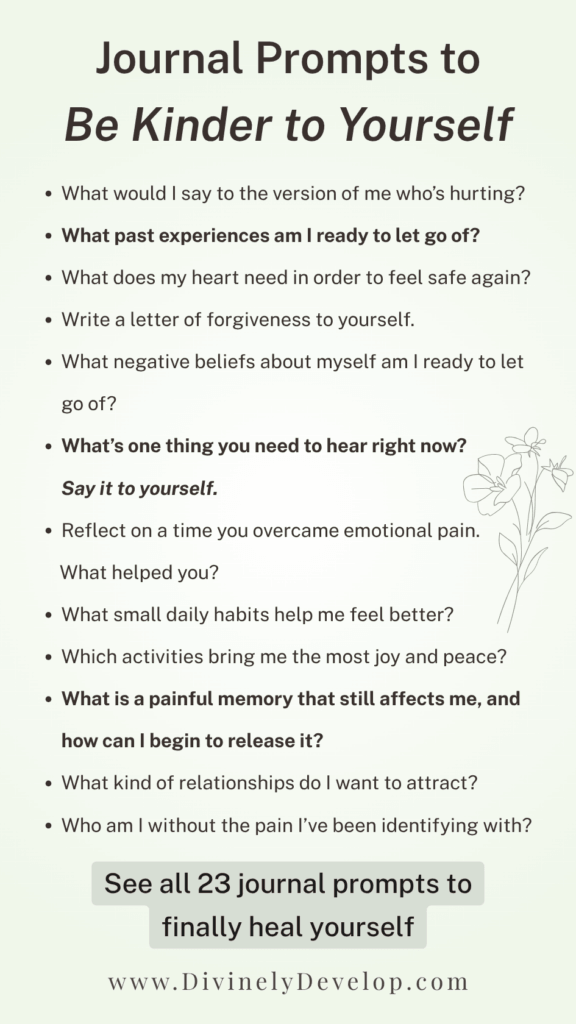
- What past experiences am I ready to let go of?
- Write about someone you need to forgive in order to move forward.
- What is a painful memory that still affects me, and how can I begin to release it?
- Write a letter to someone who hurt you (no need to send it).
- What’s something I wish I could say to someone who caused me pain?
Self-Compassion Journal Prompts
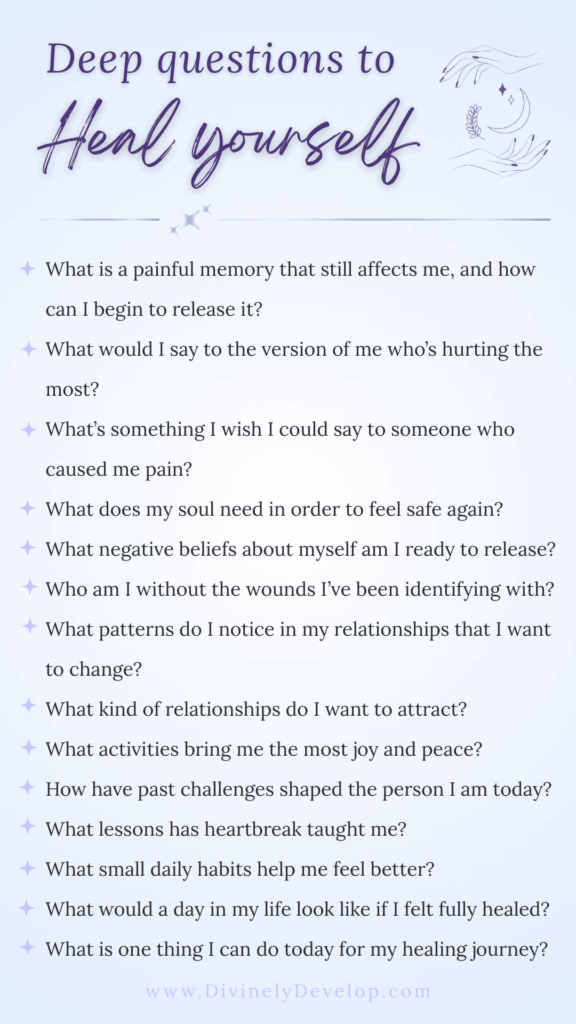
- What would I say to the version of me who’s hurting the most?
- What does my heart need in order to feel safe again?
- Write a letter of forgiveness to yourself.
- What negative beliefs about myself am I ready to release?
- What’s one thing I need to hear right now? Say it to yourself.
- What self-care practices support my healing the most?
Related: Journaling for Self-Esteem: 40 Prompts to Love Yourself More
Journal Prompts for Moving Forward
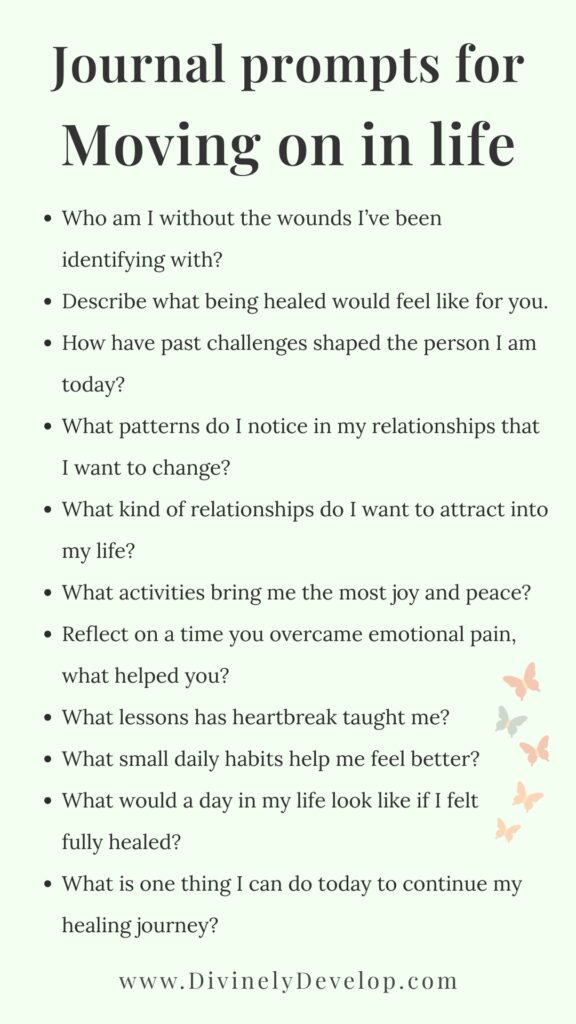
- Describe what being healed would feel like for you.
- What patterns do I notice in my relationships that I want to change?
- What kind of relationships do I want to attract into my life?
- Who am I without the wounds I’ve been identifying with?
- Reflect on a time you overcame emotional pain. What helped you?
- How have past challenges shaped the person I am today?
- What lessons has heartbreak taught me?
- What small daily habits help me feel better?
- Which activities bring me the most joy and peace?
- What would a day in my life look like if I felt fully healed?
- What is one thing I can do today to continue my healing journey?
If you’re tired of feeling stuck and ready to move forward, I created a Complete Guide to Reinventing Yourself to help you release the old identity that has kept you stuck and align with the version of yourself you actually want to become.
How to Use Journal Prompts for Healing
- Be honest: Let your thoughts flow without judgment; this is your safe space.
- Find your way: You can journal on paper, in a dedicated journal, or by recording through video or audio.
- Use supporting prompts: Incorporate variations like healing journal prompts for mental health or journal prompts for emotional healing to address specific areas when needed.
- Reflect and review: Occasionally revisit past entries to notice patterns and growth.
Read next: 33 Journal Prompts for Mental Health to Feel Better Now.
Embrace Your Healing Journey
Using journal prompts for healing allows you to reflect, release, and rebuild emotional strength. By dedicating time to yourself, you give yourself the love you deserve and support your healing journey in a meaningful way.
Whether you’re dealing with past wounds, relationship challenges, or trauma, these 23 healing prompts offer guidance and clarity. Each page you fill is proof of your self-love and resilience and a step closer to peace.
Remember, healing is not linear, so embrace it, and know that your happier, healed self is waiting on the other side.